



Features | Unison / Harmony 2015
Carly Rae Jepsen
By Dom Sinacola | 21 December 2015
I never had any hope for Carly Rae Jepsen. How very un-poptimistic of me, I know—though it wasn’t because she was a bright-shining part of the commercial cadre of bubble-gum’d singers, it was because I couldn’t stand “Call Me Maybe” or its adored bullshit of a video which reduced a poor hunky gardener’s sexual identity to a punchline about how relatable poor CRJ’s love life is to millions of young people who actually have to deal with serious self-esteem issues and no discernible, marketable talent. It was because she’s friends with Owl City, because the song they wrote together is intolerable, because why would anyone be friends with Owl City? Why would anyone feel OK about infantilizing two adults for the purpose of appealing to 12-year-olds? Why would someone who’s friends with Owl City and whose full understanding of non-cisgender identity amounts to being all grumpy-faced about the hot dude not liking the only person with a vagina in the room—why would such a person be anyone I’d have faith would be able to shake her head free from the maelstrom she’d gotten herself into with her dumb song and her dumb friendship with Owl City and prove she’s actually a deft manager of the many influences she’s necessarily—even unintentionally—accumulated over the 30 years she’s actually been alive?
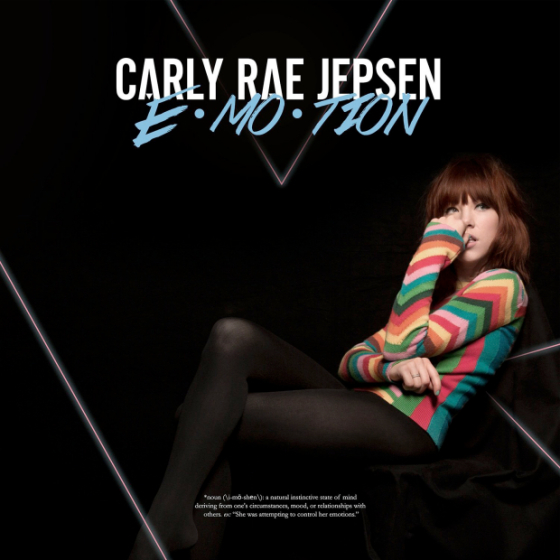
I was wrong. On E•MO•TION, Jepsen seems to be in full control. Recorded in three countries, in over 15 studios, care of at least 16 producers (only counting the standard, non-bonus or -import edition), her third album is so much more than an obvious transcending of the earworming era of “Call Me Maybe,” it’s an endlessly listenable amalgamation of absolutely every big, blunt, blatant emotion with which pop music blesses us dumb humans and our dumb relationships. That’s why it’s called what is it, of course: It’s a whole-hearted attempt at emulating, and then owning, the many influences and desires she harbors as a full-grown, adult artist.
From Sade to Springsteen, from George Michael to Michael Jackson to Joe Jackson to Joe Cocker, E•MO•TION cites at least three different decades of music, and into each one she leans with her full weight, knowing it’ll bend to fit her particular artistic brand. And even if that brand is only one of love found and lost, of broken hearts and “boy problems”—the stuff we’ve come to expect from her, the stuff we may have once held against her, the stuff she could probably talk to her dumb friend Owl City about without filter—Jepsen’s strength is her sincerity. This means that if she can wrangle Dev Hynes and Ariel Rechtshaid for one track, that track will be the best song she’s ever written. Which “All That” definitely is—an uncomplicated array of yearning writ in cool neon and geologic time—and a song that, despite all involved, feels completely and utterly Jepsen’s own. This means that if you have Vampire Weekend’s Rostam Batmanglij clamoring to microwave your “Warm Blood,” you will witness your coy anthem still bubble with hot fire beneath the surface, radioactively charged and all the more dangerous for it. This means that if you want a song about being a slacker (“Let’s Get Lost”) to bear the same swagger as Hot Chocolate’s “Every1’s a Winner,” you stick a sax on that thing and let it go free. This means that if you have an obnoxious single about teenage crushing (“I Really Like You”), you stick Tom Hanks in the middle of the thing and trust it’ll work out. It will.
Though, admittedly, I’m not entirely on board with the person Jepsen appears to want to be here. It’s difficult to rationalize the quietly masterful curator with the painfully traditional girly roles she inhabits when she sings dumb crap like “Sometimes I wish that I could change, but not for me, for you, so that we could be together, forever, but I know that I won’t change for you, because where were you when I needed someone?” I have unpleasant flashbacks to the demure sweetiepie of “Call Me Maybe,” to the harmless flirtation with her dumb friend Owl City: She is always wishing, crushing, placating, waiting—forever between what she wants and what she wants to escape. Not that such desire is only left to the realm of young women, but what bugs me is that she often sounds like she refuses to take responsibility, to own her agency, for the messy lovey-doveyness that should be outside the purview of her position as genre-murdering pop star badass. Why does she put up with this shit? Why does she still talk to that Owl City asshole?
Or maybe this isn’t whom she wants to be; this is what she is; this is the contradictory lifeblood of poptimism—that you can enjoy Future and despise his lifestyle, while recognizing the severe anguish he’s endured; that you can be ashamed of thinking about what it would be to hate-fuck Justin Bieber; that you can wish Carly Rae Jepsen were stronger, can crush on her strength, can placate her neediness with accepting that she’s friends with that dipshit Owl City, can wait for her to be stronger. I have so much hope for you now, Carly Rae Jepsen—I have so much hope for all of us.