



Features | Unison / Harmony 2015
Denny Lile
By Maura McAndrew | 21 December 2015
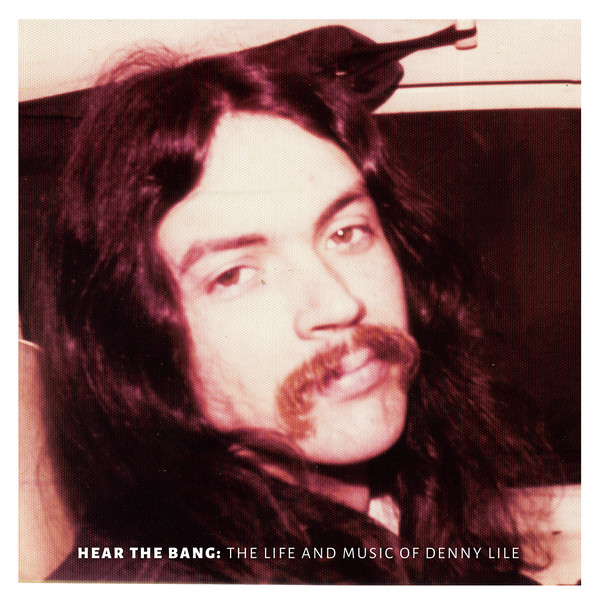
This year gave us two incredible buried-treasure country reissues: the first was Kenny Knight’s 1980 record Crossroads, given new life by Paradise of Bachelors, and the other is Denny Lile’s Hear the Bang, released in 1973 and completely unknown until Lile’s nephew, a custom amp builder, brought it to friends at Fat Possum. Lile and Knight share a lot of similarities—long-haired and mustachioed, they’re working-class fellas from mid-sized cities (Denver, Louisville) who struggled throughout their lives to get their music heard. But where Knight’s life rambled on through his musical disappointments (he is currently happily married and running a pet resort called Fuzzypups), Lile’s story ended up in heartbreakingly familiar territory. Talented but fragile, Lile never made it big, and wound up drinking himself to death at the age of 44.
While this tragic biography gives the record more impact, it can’t eclipse the music itself. Hear the Bang is a delicate collection of Americana in the vein of Neil Young (though Lile’s gentle tenor recalls Jim Croce or James Taylor), but more than that, it feels perfect and easy, like a collection conjured within a dream. Though recorded early in Lile’s career, Hear the Bang sounds unmistakably like a life’s work, a greatest hits, one well-loved and worn-in song after another. Lile’s only tangible career success is not featured here: that was a later song, “Fallin’ Out,” recorded and released by Waylon Jennings in 1987 (whose royalties Lile used to buy the van in which he lived out the final years of his life). This instead is the music that came before, when Lile thought he would be the one singing the story of his life for the world to hear. And that investment comes through in tracks like the title cut, “Once More with Feeling,” “Will You Hate Me When I’m Gone,” and “Love is on a Freight Train,” which all roll along trailing warm, beautiful melodies, a note or two just barely escaping full-fledged sorrow.
The documentary that accompanies the record paints a comprehensive portrait of Lile: his rocky childhood, his early musical ambition, his frequently missed connections with fame. It’s the story of a man who dedicated his everything to music, but for whom music couldn’t return the same dedication. Yet, what is unique about Lile is not this cinematic story of abject tragedy, but the unexpected nature of what went un-embraced for so long. As Justin Kinkel-Schuster of Fat Possum band Water Liars recalls in the documentary, upon first hearing Hear the Bang, he stopped his car and pulled over, floored. The story piques our interest, but the music has a way of holding it, singularly, until everything else falls away.